Uncovering the Human History of Limpopo-Lipadi
By: Limpopo-Lipadi | Date: Dec 10, 2025 | Reserve
Limpopo-Lipadi is known for its wildlife and wilderness, yet the Reserve also sits on a far older story. Long before modern conservation, the Limpopo River valley was home to Stone Age hunter-gatherers, early herders and farmers, metalworkers and later Tswana communities who lived, travelled and exchanged goods along this natural corridor. The koppies, river terraces and rocky ridges across the Reserve still hold their traces in stone tools, engraved surfaces, decorated pottery and the remains of ancient settlements.
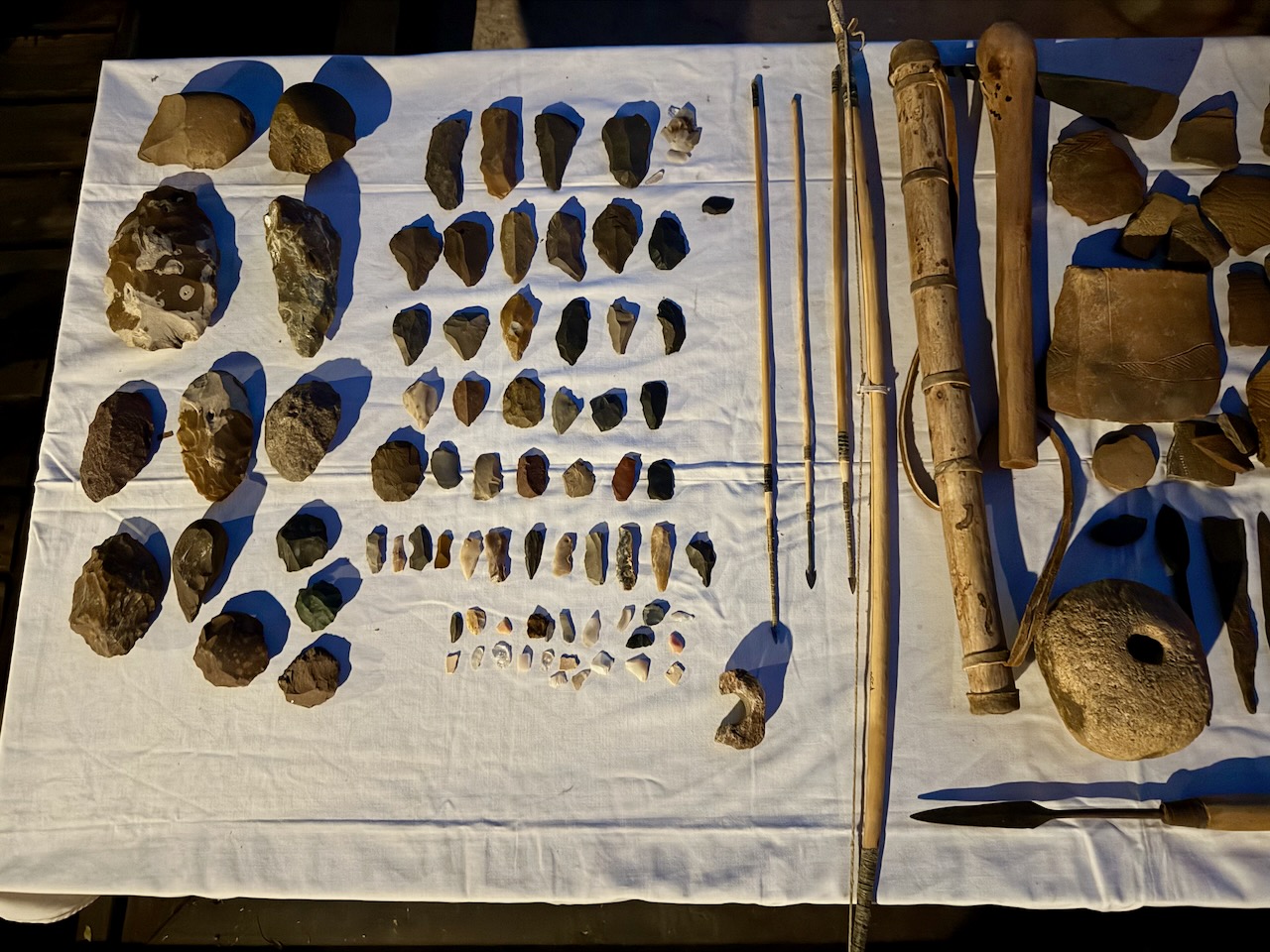
Human presence here reaches back many thousands of years. The earliest inhabitants were Stone Age foragers, likely ancestors of the San. They crafted stone flakes, blades and hand tools, moved with the seasons and left behind pigments and rock paintings, including those reported on Lipadi Hill. Their presence in the Tuli landscape extends to at least 8,000 BC, offering rare insight into early life along the Limpopo.
Much later, herding and farming communities arrived. They brought livestock, metalworking, grain storage and distinctive pottery styles that changed over the centuries. Although Wim Biemond’s archaeological research focused north of the Reserve, it provides valuable context for Limpopo-Lipadi. On a single Tuli Block floodplain farm, Wim identified more than seventy Iron Age sites, showing how communities lived, built their villages and worked metal along the river floodplain.
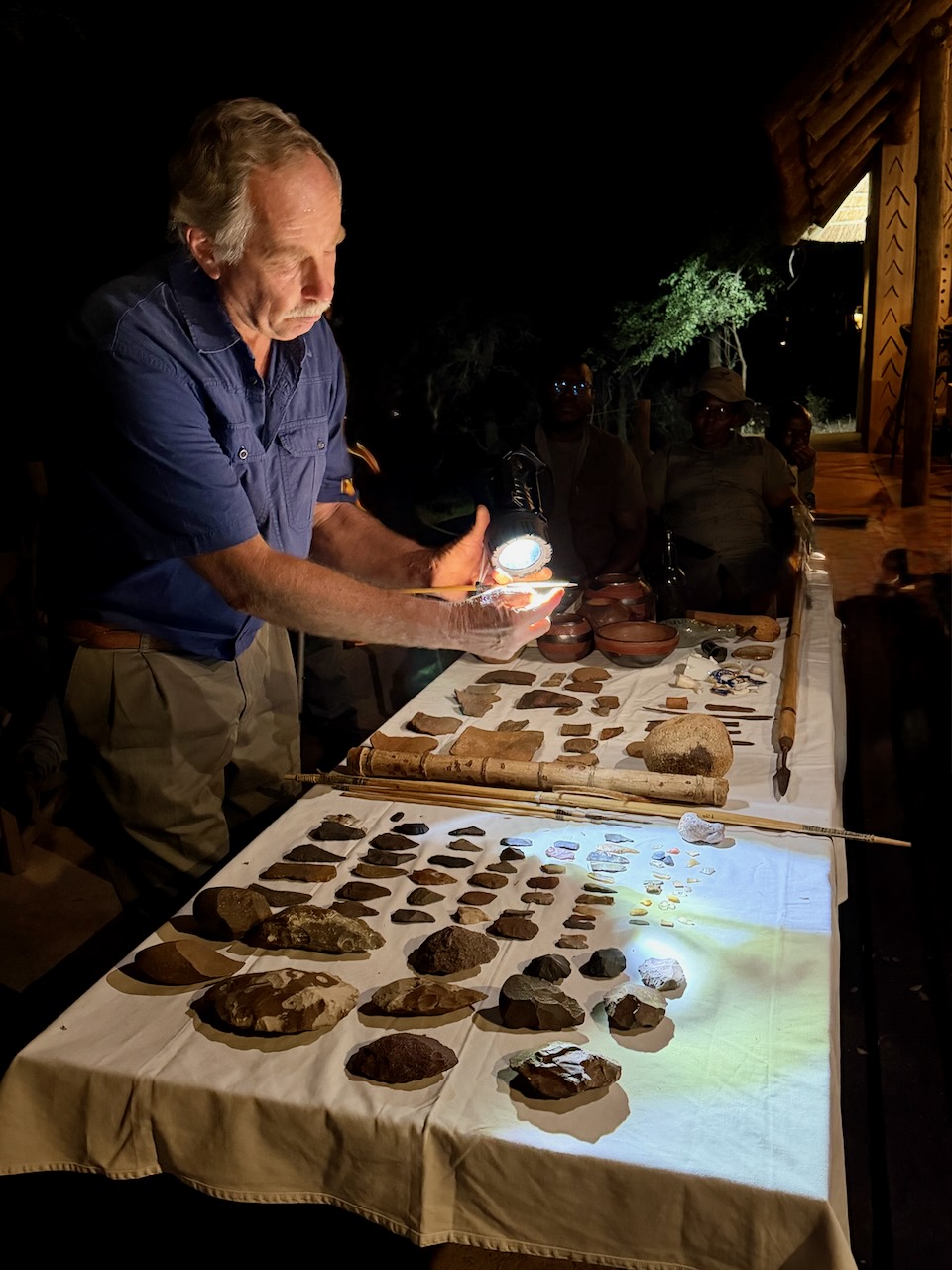
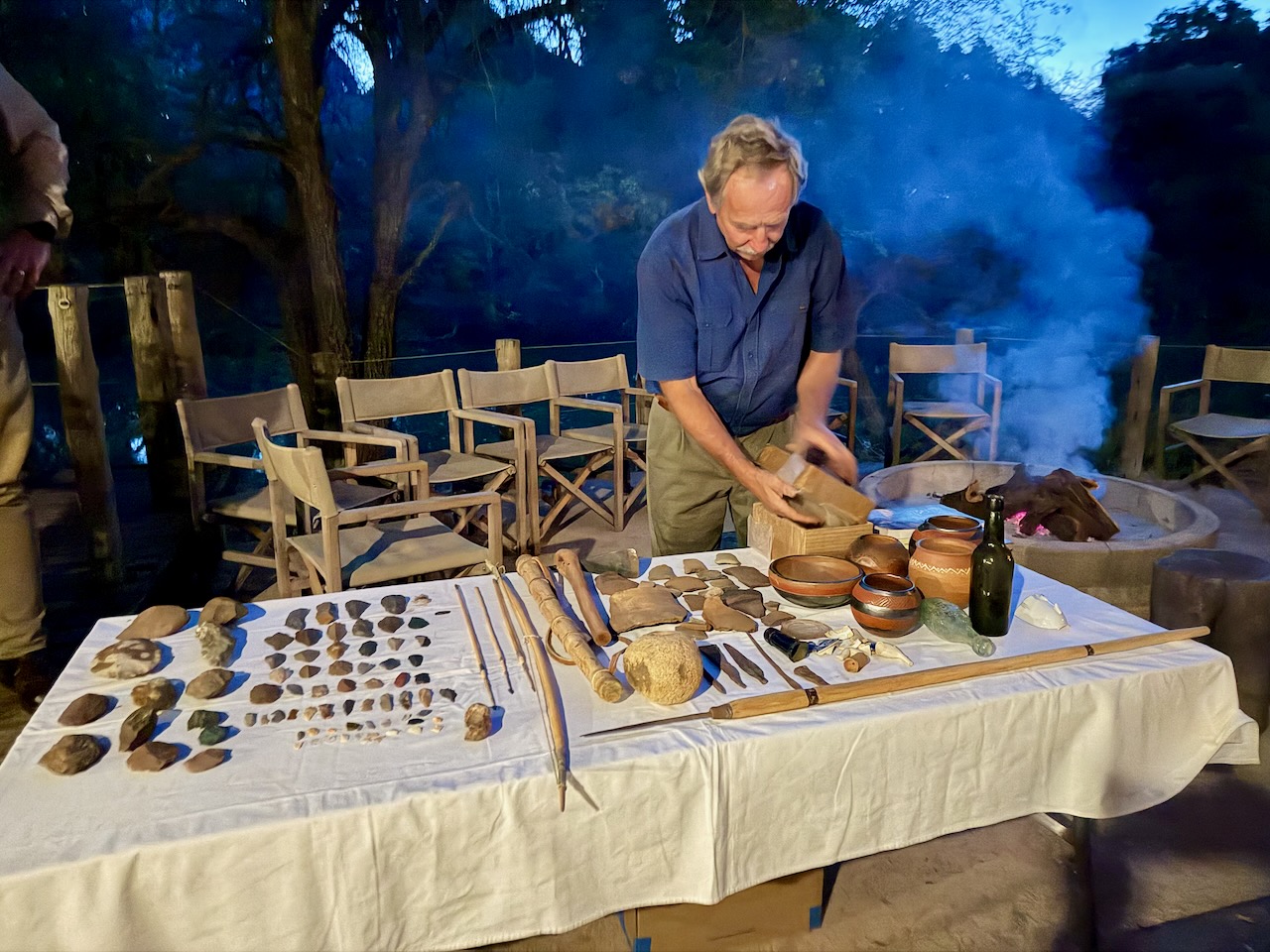
Recently, Wim visited Limpopo-Lipadi to share his insights and guide a group of co-owners into the bush to uncover some of the Reserve’s archaeological features.
A morning uncovering the past
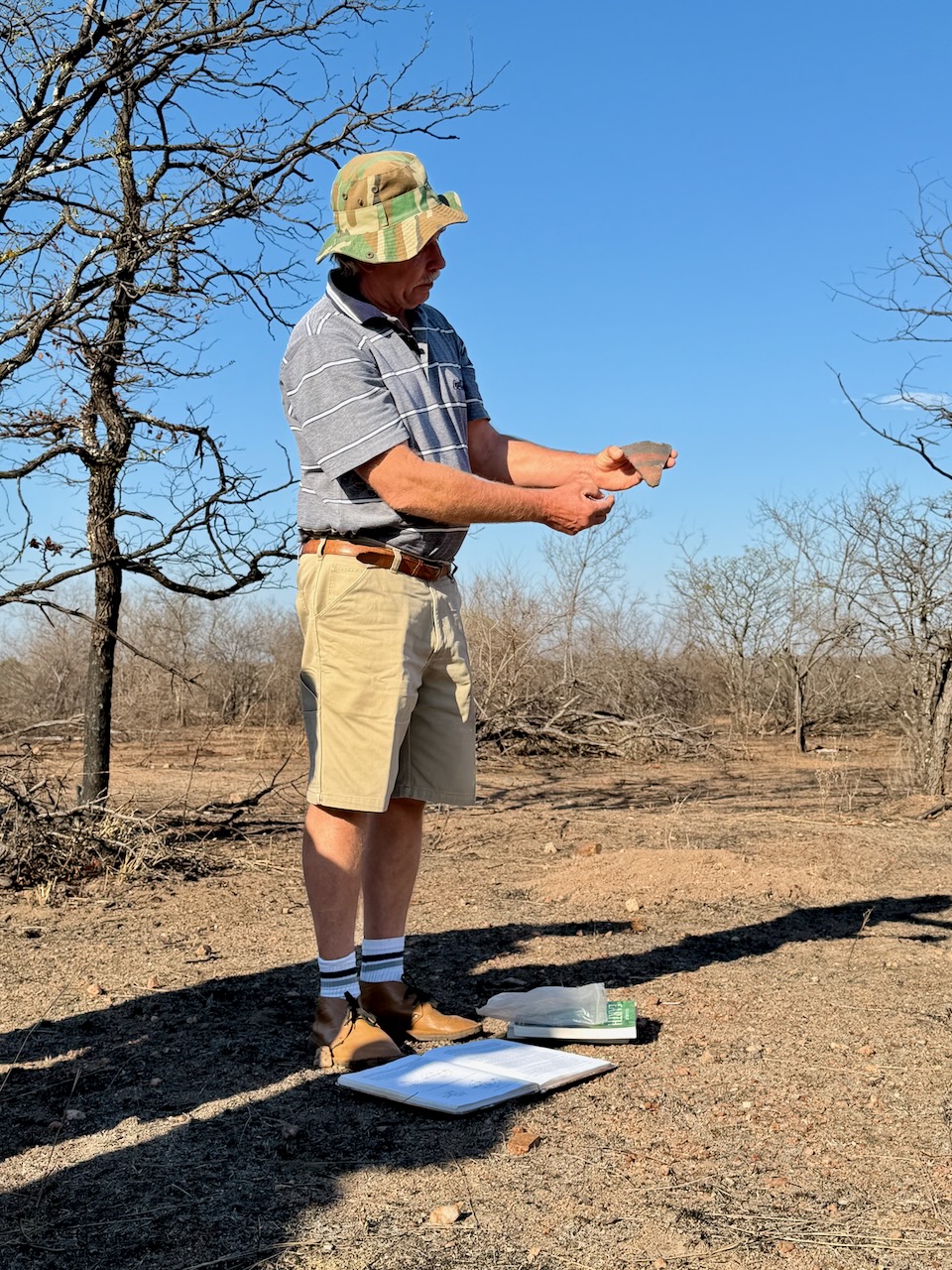
Early one October morning, the group travelled to an area recently cleared by a controlled burn. With the tall grass gone, the bare earth offered ideal visibility. Within minutes, Wim pointed out a circular grey patch on the ground, the compressed remains of an old kraal where cattle were kept at night, surrounded by conical huts. Several such kraals would have formed a village, likely dating to the early 1600s.
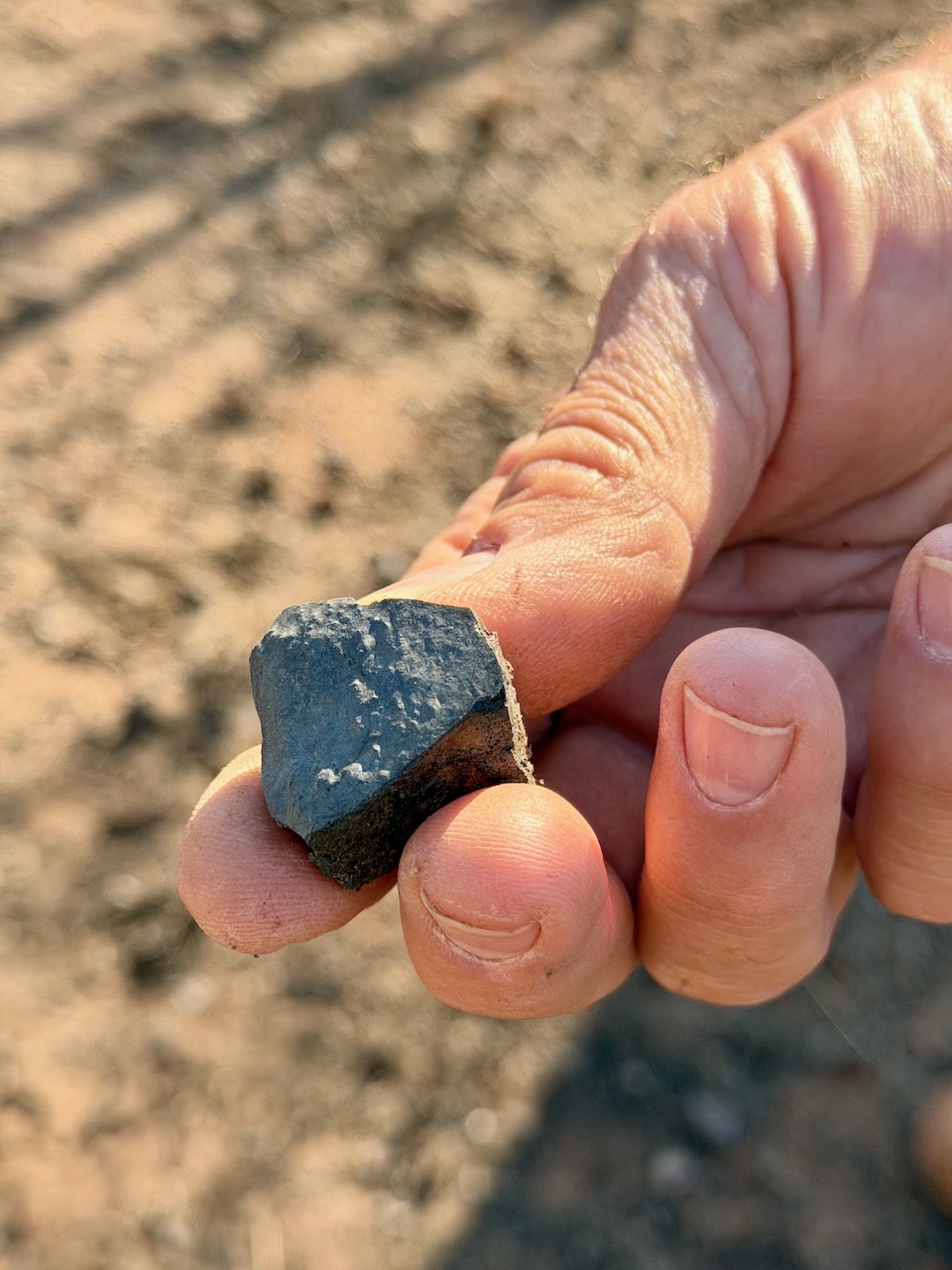
Scattered around were signs of daily life: chipped stones shaped into tools, fragments of iron slag from smelting, decorated pottery pieces and a smooth stone used for washing or grinding. Each object revealed the skills and resourcefulness of the people who once lived here.
Layers of stories beneath the surface
While these early modern settlements are the most visible today, they sit above much older traces of Stone Age activity spread across the Reserve. Every fragment contributes to a long timeline of human presence that stretches from prehistoric foragers to Iron Age farmers and later Tswana communities.
A living landscape of culture and nature
Walking at Limpopo-Lipadi means moving through a landscape shaped by both wildlife and people. The bush holds memories of communities that hunted, herded, forged metal, raised families and looked out over the Limpopo River long before us.
Wim has offered to organise a future dig and exploration, which may reveal more pottery, stone tools, iron work and even the glass beads once traded across this valley.
Limpopo-Lipadi is a place where the past and the present coexist, with the secrets of the bush waiting to be discovered.
Photos: Cornelie de Jong